THE UNIT
Heat, measured
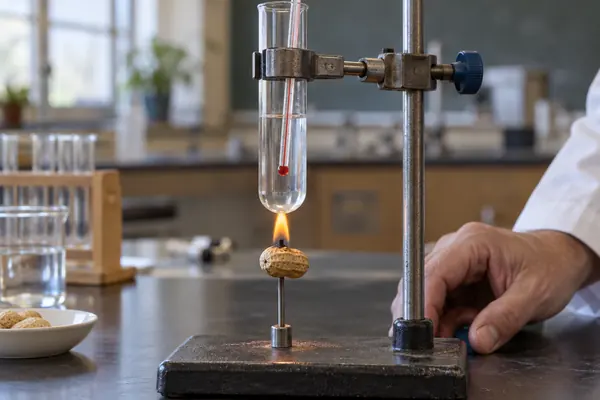
A small calorie is roughly the energy to warm 1 gram of water by 1 °C. The food calorie is a thousand of them: one kilocalorie, which NIST lists as 4.184 kilojoules.
See the numbersWHAT THE NUMBERS MEAN
Food labels often count energy twice.
Labels often show energy in kilojoules and kilocalories, and large chains in England must print calories on their menus. Behind those numbers sits a nineteenth-century heat unit and a short table of factors set in law.
1 kcal ≈ 4.2 kJ
THE SHORT ANSWER
A food calorie is a kilocalorie.
Kilojoules measure the same energy in SI units.
THE UNIT
A small calorie is roughly the energy to warm 1 gram of water by 1 °C. The food calorie is a thousand of them: one kilocalorie, which NIST lists as 4.184 kilojoules.
See the numbersTHE LABEL
The NHS says calorie information is often given in kcal and may also be given in kJ. On packaging it sits under the heading “energy”.
Read a labelTHE FACTORS
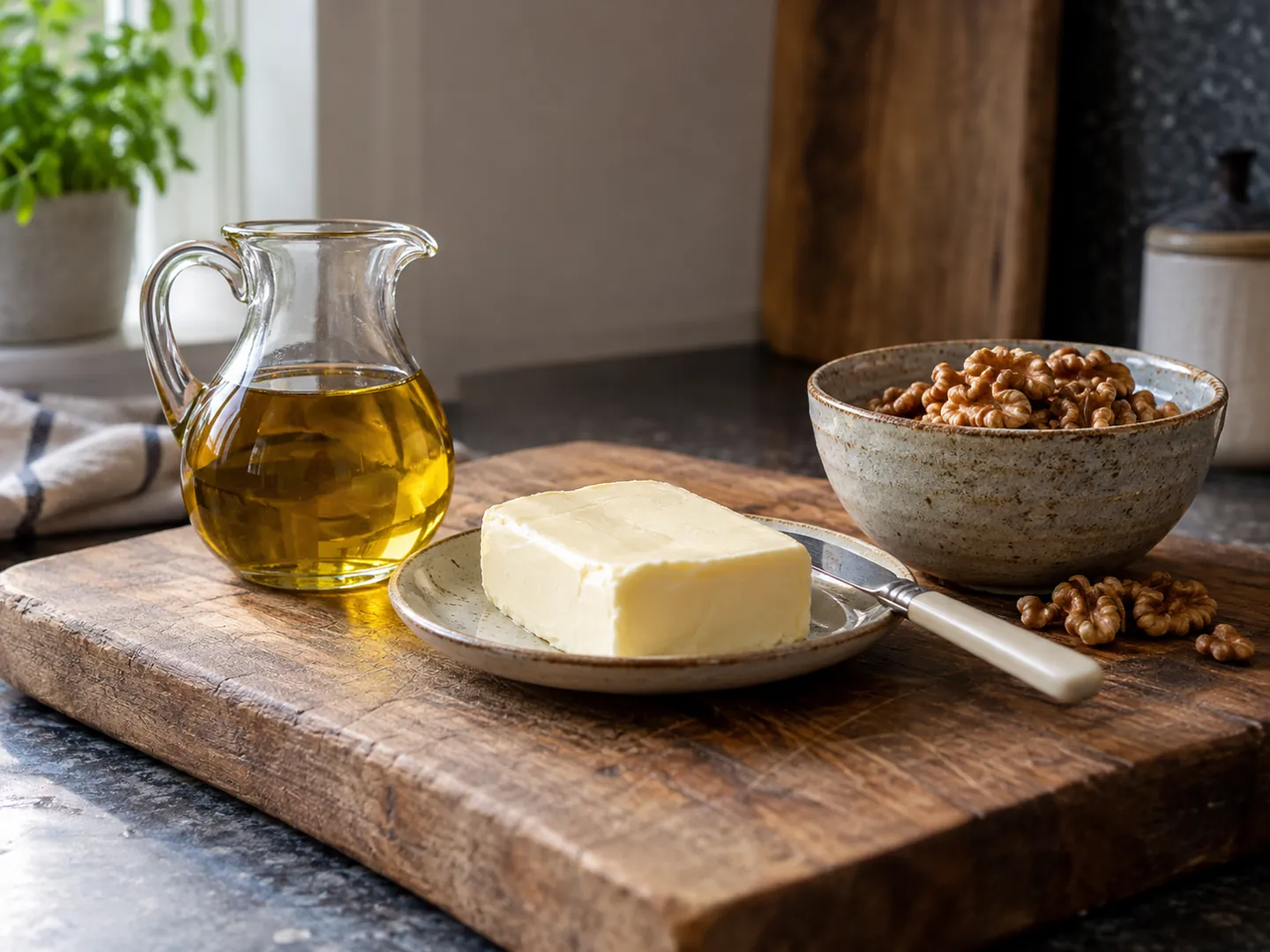
Labelling law converts each nutrient with a fixed factor: fat 9 kcal per gram, alcohol 7, protein and carbohydrate 4, fibre 2.
Compare nutrientsGeneral information only, not medical advice. For advice about your own health, speak to a doctor, pharmacist or other qualified health professional.
A QUICK NUTRIENT CHECK
Pick a nutrient to see the conversion factor UK food labels use to work out energy. The bar shows how energy-dense each gram is.
Factors from Annex XIV of retained Regulation (EU) 1169/2011 on food information to consumers. This is general information, not dietary or medical advice.
TWO NUMBERS WORTH KNOWING
One figure that links the two units,
one that menus in England must print.
4.184 kJ
Kilojoules in one kilocalorie
NIST's Guide to the SI lists the thermochemical kilocalorie as exactly 4,184 joules. The International Table kilocalorie is slightly larger, at 4,186.8 joules.
CONVERSION · NIST
2000 kcal
The statement large chains must show
Since 6 April 2022, businesses in England with 250 or more employees must show calories and the statement ‘adults need around 2000 kcal a day’ where customers choose food.
MENUS · ENGLAND
As a guide, the NHS says an average man needs 2,500 kcal a day and an average woman 2,000 kcal, and that needs differ with age, weight, height and how much exercise you do.
FOUR THINGS TO LOOK FOR
Labels and menus follow set rules, so a few checks tell you what a number actually refers to.
On packaging, calories appear under the energy heading, often as kJ and kcal side by side.
Values may be per 100 g or per portion. On menus, calories refer to the portion described, such as one slice.
Divide kilojoules by about 4.2 to get kilocalories, or multiply kilocalories by 4.2 for kilojoules.
The menu statement is a general reference for adults. The NHS says individual needs vary.
A LITTLE HISTORY
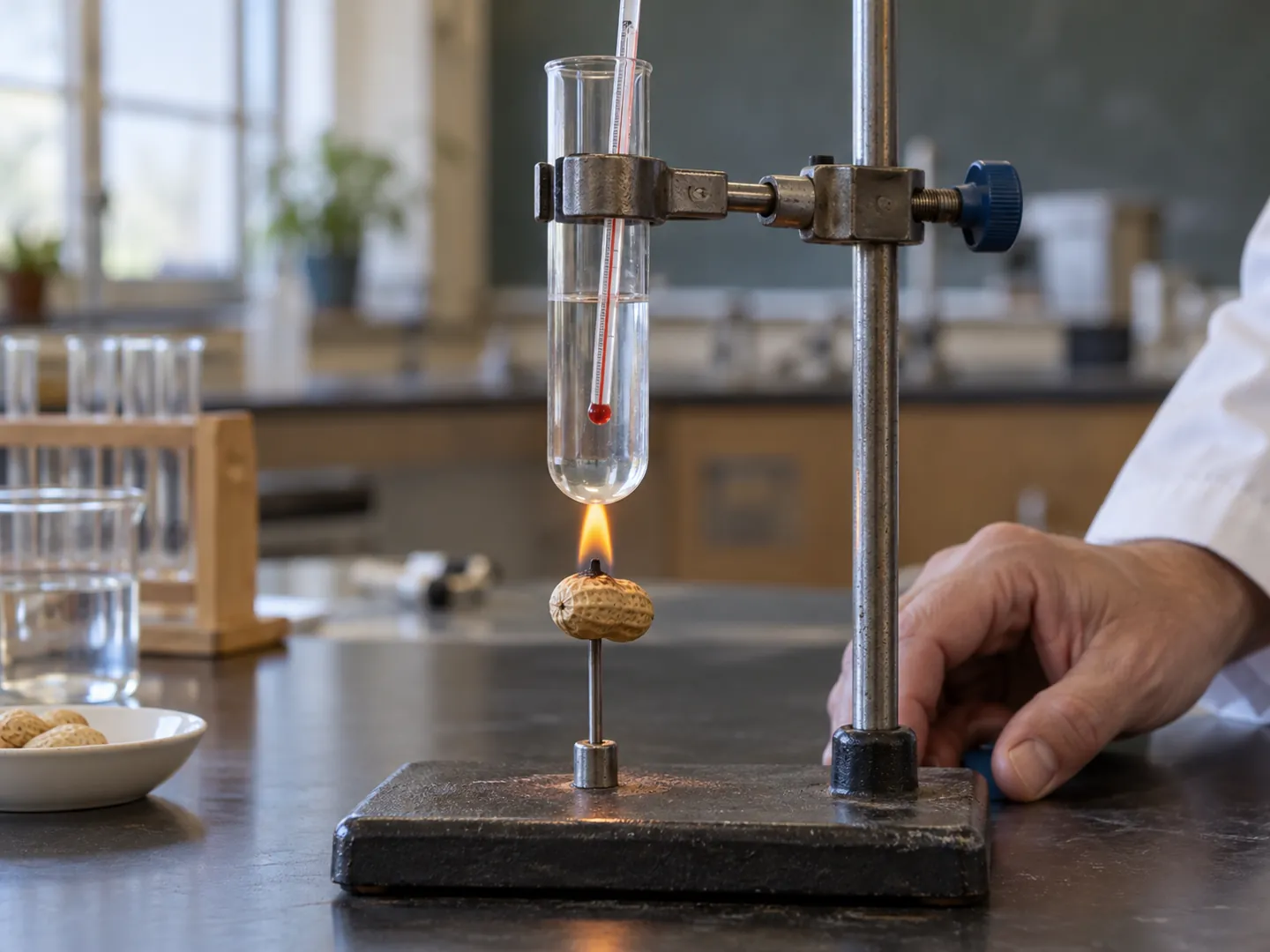
The word comes from the Latin calor, heat. Nicolas Clément introduced the calorie as a unit of heat in lectures between 1819 and 1824, and in 1887 Wilbur Atwater used the large Calorie in an influential article on the energy in food.
The joule became the SI unit of energy in 1948, and the calorie is not an SI unit. Food labels still use both, which is why the same energy often appears twice on a pack.
Questions
Yes. The calorie used for food is the large calorie, a kilocalorie, equal to 1,000 small calories. Labels in the UK show it as kcal.
Both measure energy. kcal is the food calorie, a kilocalorie; kJ is kilojoules, the SI unit. One kcal is about 4.2 kJ (NIST lists 4.184). The NHS notes calorie information is often given in kcal and may also be given in kJ.
Food labelling law sets fixed conversion factors for calculating energy: 37 kJ or 9 kcal per gram of fat, 17 kJ or 4 kcal for protein and most carbohydrate, 29 kJ or 7 kcal for alcohol and 8 kJ or 2 kcal for fibre.
In England, businesses with 250 or more employees selling non-prepacked food for immediate consumption, such as restaurants, cafes and takeaways, must show calories at the point of choice. The rules started on 6 April 2022.
No. The menu statement is a general reference for adults. The NHS gives 2,500 kcal for an average man and 2,000 kcal for an average woman as a guide, and says needs depend on age, weight, height and activity.
Sources
ABOUT THIS NAME
doodlecal.com is part of the DoodleSale portfolio. It isn't in an auction right now, but you can ask about leasing it.